
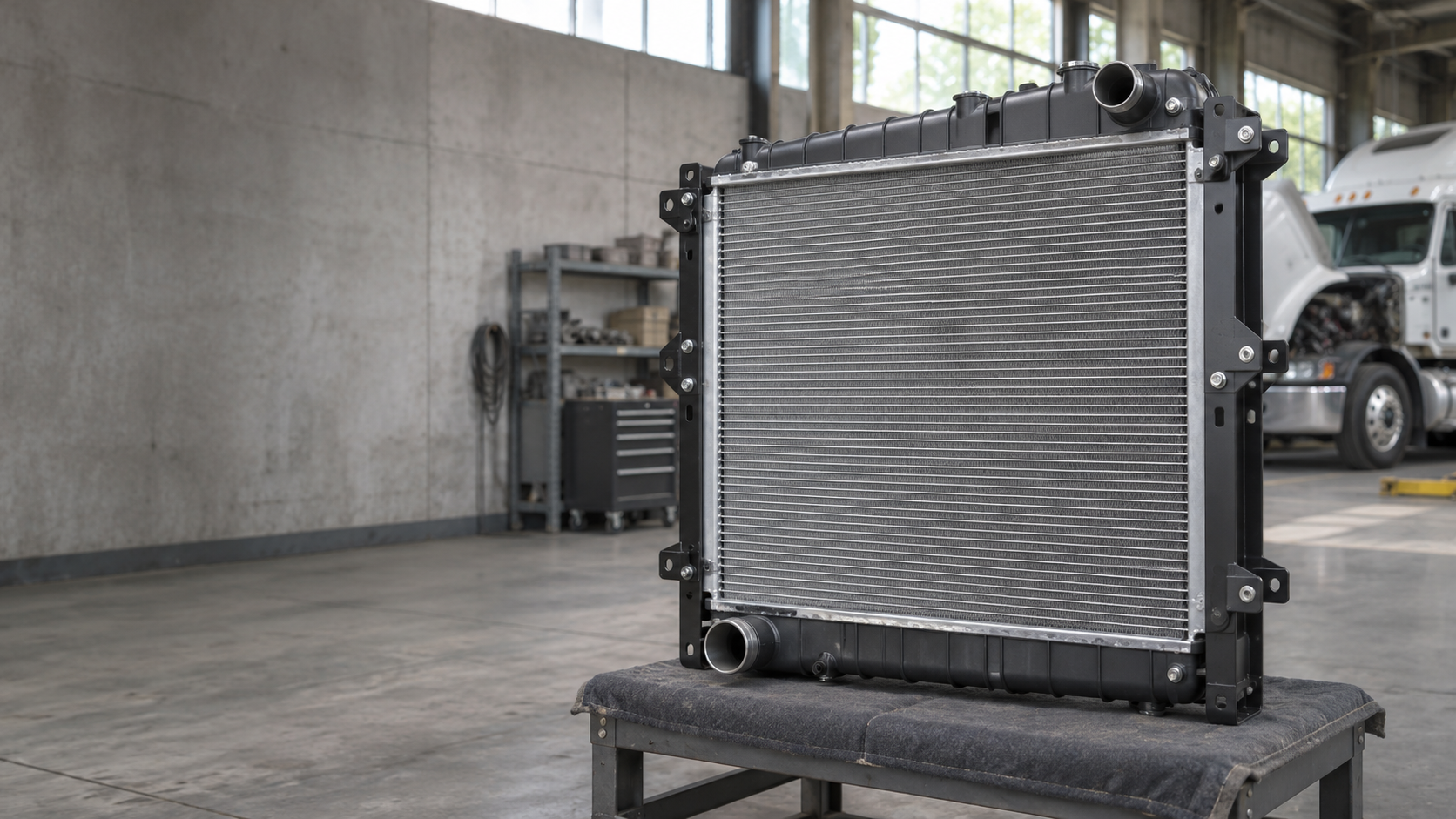
The truck is booked into the shop, and two radiator quotes are on the desk. One comes from the dealership. The other is an aftermarket replacement with a lower price and an OEM cross-reference that appears to match.
Is the extra money buying a different radiator, different warranty terms, or simply a different supply route?
When comparing OEM vs. aftermarket truck radiators, the useful question is what each specific replacement offers for your truck. Compare its application, construction, documented cooling requirements, and repair costs before deciding which quote makes sense.
What Do OEM and Aftermarket Actually Mean?
OEM stands for original equipment manufacturer. In everyday parts sales, buyers often use “OEM radiator” to mean a genuine replacement supplied through the truck manufacturer’s parts network. The truck manufacturer may source that radiator from a specialist component producer rather than manufacture it itself.
An aftermarket radiator is supplied through the replacement-parts market outside that genuine-parts channel. It may reproduce the original arrangement or use a different construction intended for the same application.
Terminology can be loose. Ask who manufactures the radiator, which part number identifies it, and whether it is a genuine truck-brand part or an aftermarket replacement.
An OEM number in a cross-reference list identifies a replacement relationship. It does not make the aftermarket radiator a genuine OEM product.
OEM vs. Aftermarket Truck Radiators at a Glance
| Comparison | Genuine OEM replacement | Aftermarket replacement |
|---|---|---|
| Identification | Truck-brand part number and documented application | Manufacturer’s own number, application details, and cross-references |
| Construction | Specified replacement design for the application | May follow the original construction or use another documented design |
| Cooling suitability | Confirm the correct replacement for the truck’s build | Confirm suitability through application data and published specifications |
| Price | Obtain a current quote for the required assembly | Compare the specific product and package contents |
| Warranty | Check the applicable parts and installation terms | Check the manufacturer’s and seller’s written terms |
| Availability | Confirm actual stock and delivery timing | Confirm actual stock and delivery timing |
Neither column removes the need for a fitment check. A genuine part ordered for the wrong build can still be the wrong radiator.
Does Aftermarket Automatically Mean Lower Quality?
No. “Aftermarket” describes a market category, not one construction standard.
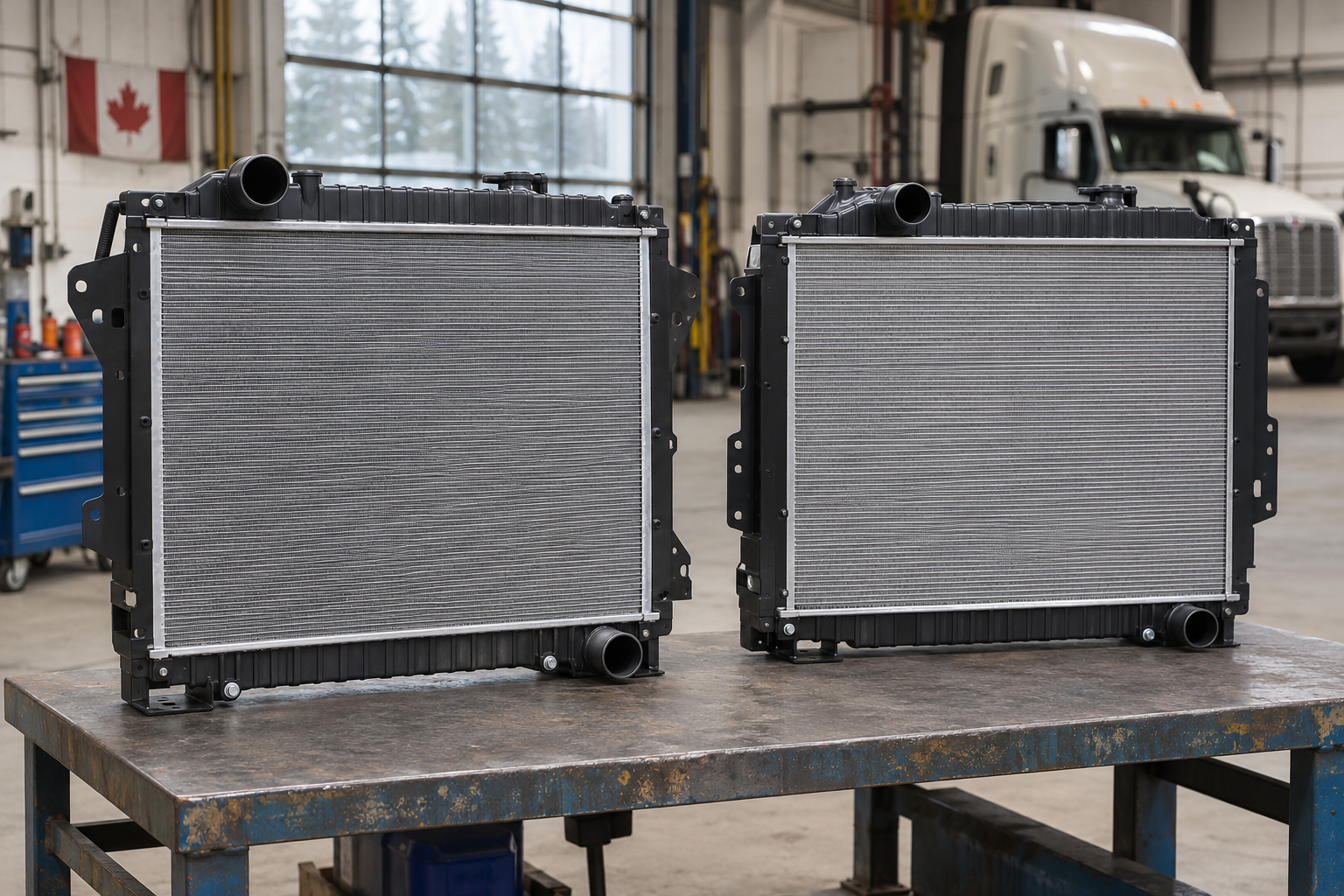
Two replacement radiators can look similar in a photograph while differing in core technology, tube and fin arrangement, tank construction, or joints. Those differences deserve more attention than a broad claim that the part is “OEM quality.”
Ask what supports that claim. Is the manufacturer identified? Are the specifications available? Can the supplier explain how the unit matches the intended application?
For example, radiator manufacturer Nissens describes corrosion, vibration, pressure impulse, thermal expansion, and thermal performance testing for its radiator range. That illustrates the kind of information worth seeking; it does not establish that every aftermarket product undergoes the same checks.
The same scrutiny applies to claims that a replacement exceeds the original specification. Ask which feature was changed and what evidence supports the claimed improvement.
Cooling Performance: Look Beyond Thickness and Row Count
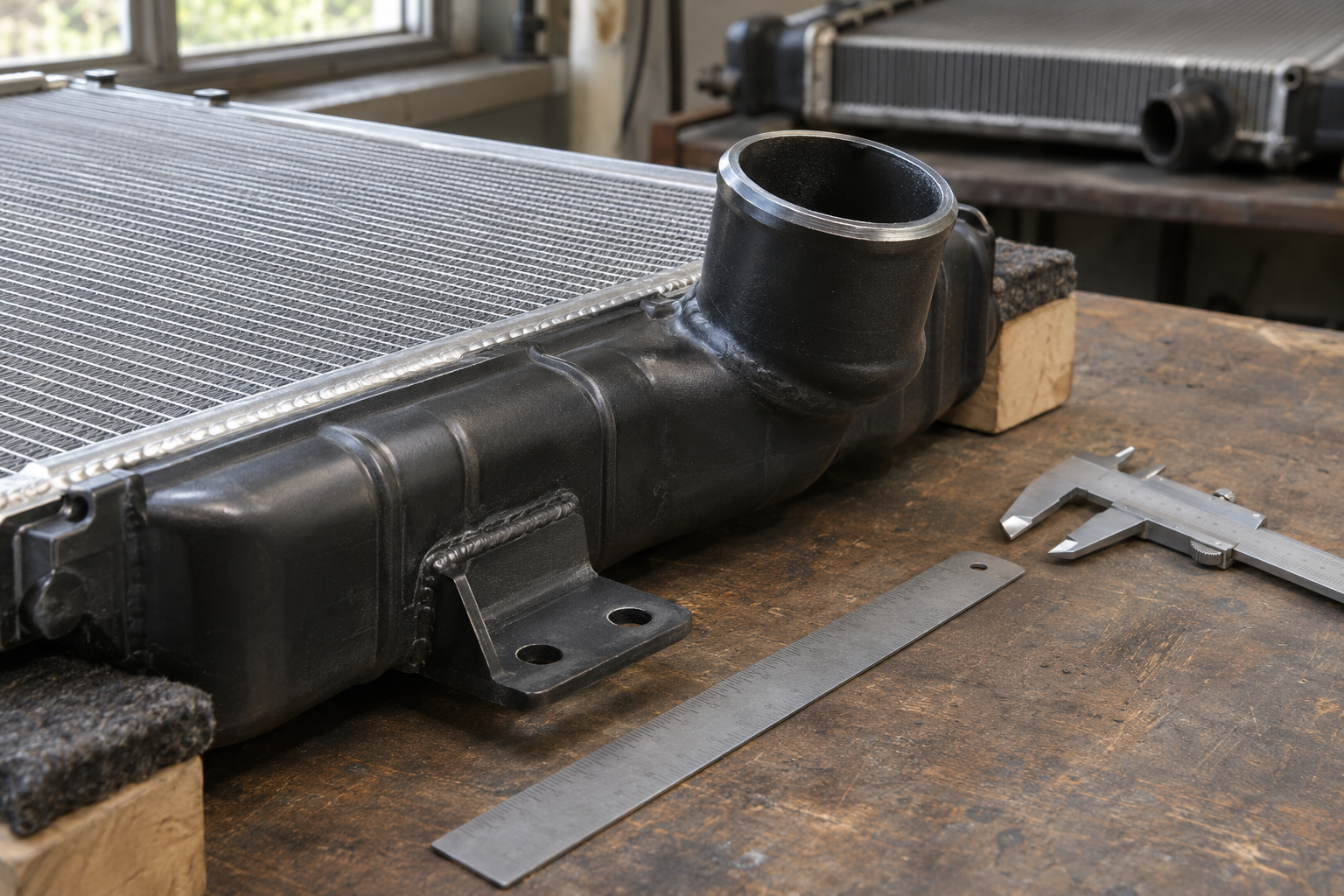
A thicker core or a higher row count is not enough to establish that one radiator will cool better.
Heat transfer depends on the construction as a whole, including tube design, fin arrangement, core technology, and airflow. NRF’s technical guidance distinguishes brazed and mechanically assembled radiators and explains why core thickness alone can be misleading when comparing different technologies.
For a truck radiator, request a replacement specified for the original cooling package and operating application. Do not choose a visually larger unit as an assumed upgrade.
A useful supplier question is: “What confirms that this radiator is suitable for this engine and cooling configuration?”
That asks for application evidence rather than a general promise about heavy-duty performance.
Fitment: What Does an OEM Cross-Reference Tell You?
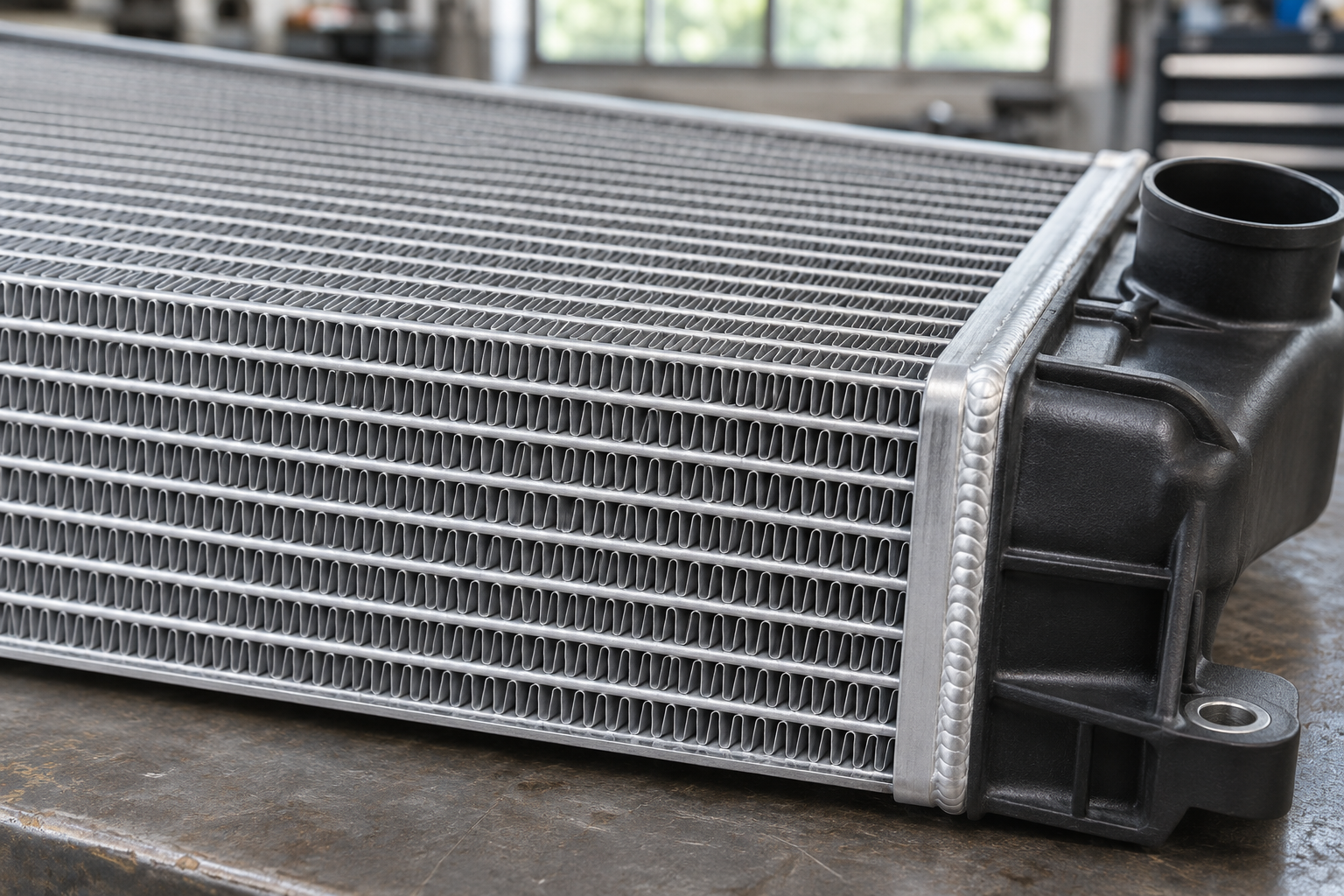
A cross-reference helps narrow the options. It should lead to a specification check, not replace one.
Compare the original reference with the replacement’s application details, then check the dimensions, mounting arrangement, hose connections, and any built-in cooler requirements. Clarify whether the quote covers a bare radiator or an assembly with a frame and other components.
This matters when comparing replacement truck radiators. A lower quote may cover a different package, even when both listings refer to the same truck model.
For the broader identification process, see our guide to choosing replacement truck parts. Here, the aim is to establish that the OEM and aftermarket quotes are for comparable replacements.
Compare the Repair Bill, Not Just the Part Price
Keep the radiator price separate from the rest of the job. Ask each supplier or repair shop to identify:
- The manufacturer and exact radiator reference.
- What comes with the quoted assembly.
- Installation labour and any additional fitting work.
- Coolant, seals, and other required service items.
- Freight charges and expected arrival date.
- The process if the radiator arrives damaged or does not match.
A hypothetical example shows why this helps. If one radiator costs $250 less but requires another $180 in freight and fittings, the difference is $70 before any additional labour.
There is no reason to assume the cheaper quote is wrong. There is also no reason to accept it before checking what the saving actually includes.
If replacement has not yet been confirmed as necessary, start with our truck radiator repair guide before comparing parts.
Read the Warranty Before You Need It
A warranty period is only part of the comparison. Read the terms for the actual radiator being quoted.
Ask whether coverage applies to the part alone or includes any removal and installation labour. Check documentation requirements, exclusions, return freight, and whether the original unit must be inspected before a replacement is supplied.
Also distinguish the radiator’s product warranty from any existing vehicle warranty or maintenance agreement. If the repair falls under an active agreement, confirm its requirements before authorising the purchase.
Avoid assuming that “OEM” means every repair expense is covered, or that an aftermarket warranty provides no support. The written terms settle that question.
When Does Each Option Make Sense?
A genuine OEM replacement may suit the job when it is required under the applicable repair agreement, the dealer has clarified a difficult application, or the correct assembly is available within the repair schedule.
An aftermarket replacement may suit the job when its application is documented, its specifications match the requirements, and its price and warranty terms fit the repair budget.
In either case, unanswered fitment questions should be resolved before ordering. If a supplier cannot identify the radiator or explain a mismatch, a lower price does not resolve the uncertainty.
Write A Comment