
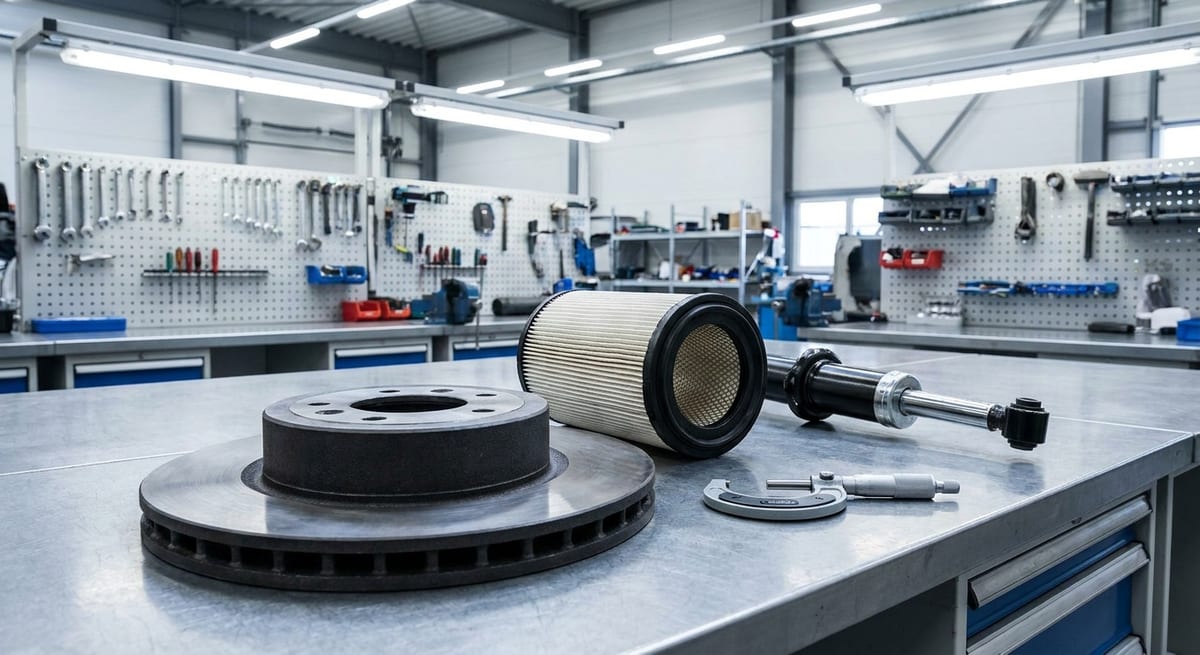
A truck sitting in the shop means lost revenue, delayed deliveries, and increased operating costs. When a heavy-duty truck needs a replacement component, finding the correct part quickly is essential.
However, choosing the right heavy-duty truck part is not as simple as searching for a product name. Many components may look similar but have different designs, dimensions, mounting locations, and applications.
The correct replacement depends on several factors, including the truck’s make, model, year, OEM number, specifications, and vehicle identification information.
Taking the time to identify a part before ordering helps prevent installation issues, reduces downtime, and ensures your truck gets back on the road faster.
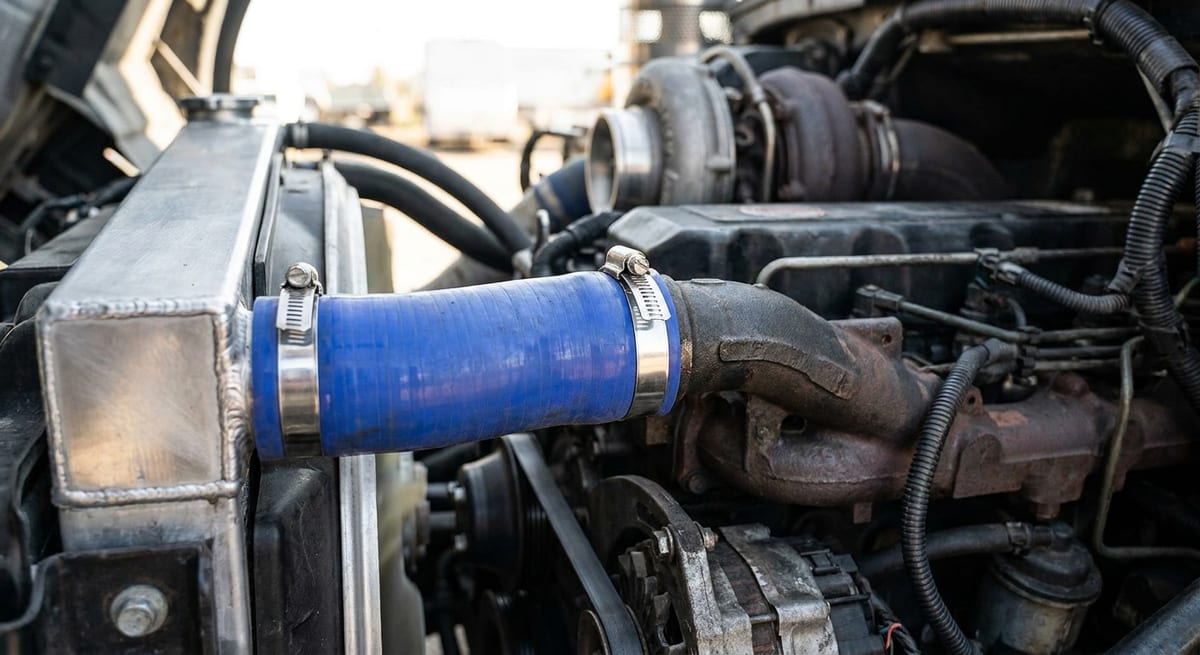
Why Choosing the Correct Heavy-Duty Truck Part Matters
Heavy-duty trucks operate under demanding conditions and depend on thousands of components working together. Even a small difference in a replacement part can affect the performance, reliability, and lifespan of the entire system.
Installing the wrong component can result in:
- Poor vehicle performance.
- Improper fitment.
- Additional repair expenses.
- Increased downtime.
- Repeated maintenance issues.
A part that appears identical may still have different specifications based on the truck model, engine configuration, production year, or manufacturer requirements.
Choosing the correct replacement the first time helps protect your investment and keeps your fleet operating efficiently.
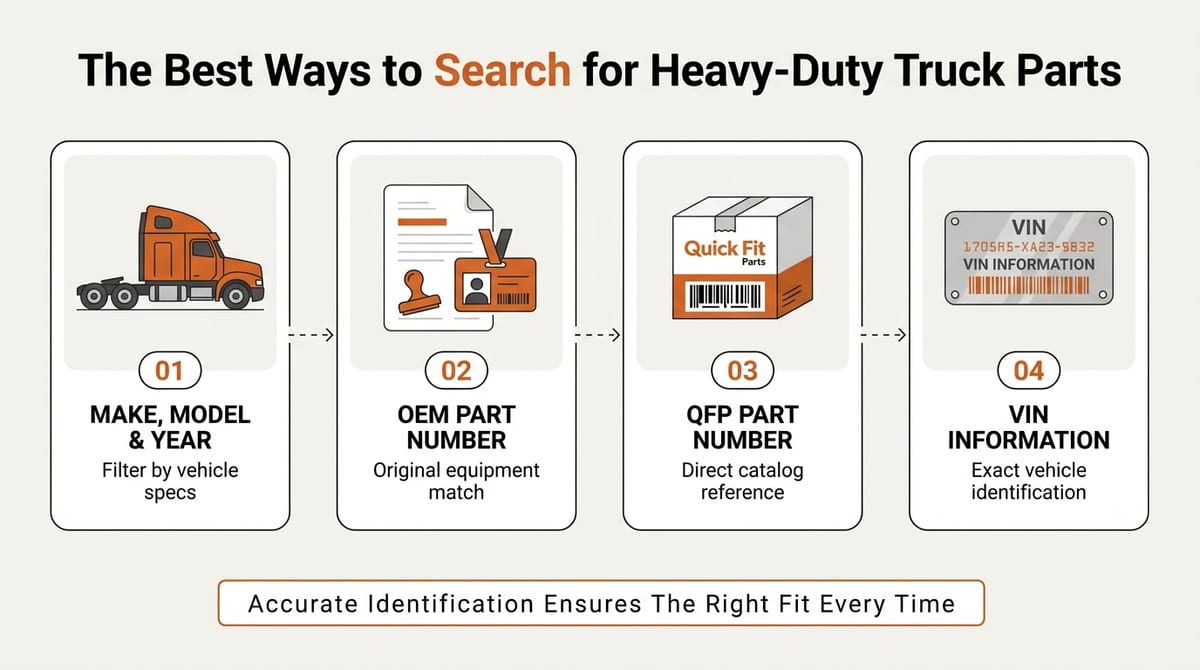
The Best Ways to Search for Heavy-Duty Truck Parts
Search by Truck Make, Model, and Year
One of the most effective ways to find compatible replacement parts is by searching according to your truck’s make, model, and year.
Manufacturers produce different versions of components for different applications, even within the same truck family. Accurate vehicle information helps eliminate incompatible options and makes the selection process easier.
For example, customers looking for Freightliner truck components should explore our Freightliner truck parts category to find products designed for specific applications.
Search by OEM Part Number
An OEM (Original Equipment Manufacturer) part number is one of the most reliable ways to identify a replacement component.
OEM numbers are assigned to factory components and allow buyers to compare replacement options with the original part.
However, an OEM number should not be the only verification method. Always confirm that the replacement matches your truck’s application, specifications, and installation requirements.
Different truck configurations may require different components depending on engine type, production year, and factory options.
Search by QFP Part Number
If you already know the Quick Fit Parts number, searching by QFP part number is the fastest way to locate the correct product.
A QFP number connects directly to a specific replacement component, helping customers avoid comparing multiple similar-looking parts.
This method is especially useful for fleet maintenance teams and repeat orders where the same components are replaced regularly.
Use VIN Information for Accurate Identification
The Vehicle Identification Number (VIN) provides important information about a truck’s specific configuration.
A complete VIN contains 17 characters and provides the most accurate vehicle identification details. The last eight digits may help with additional identification in some cases, but a full VIN may be required when confirming factory specifications.
VIN information is especially useful when:
- Multiple replacement parts appear compatible.
- The original part number is unavailable.
- The truck has special configurations.
- Additional verification is needed before ordering.
Providing accurate VIN information allows parts specialists to confirm compatibility with greater confidence
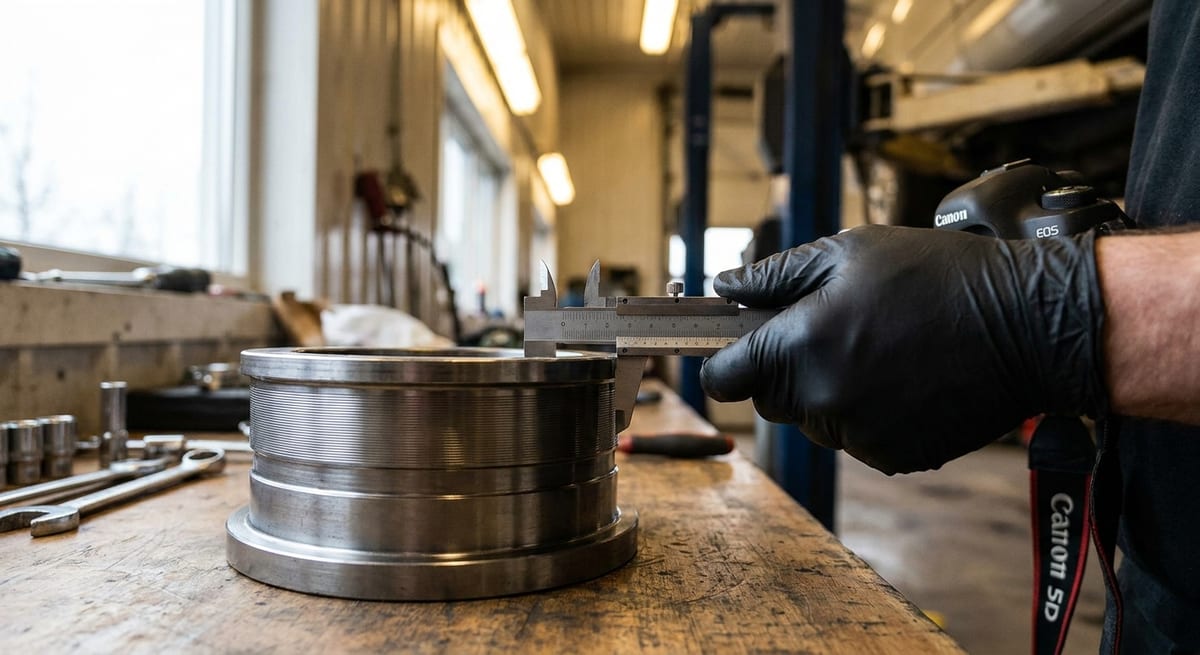
Verify the Part Specifications Before Ordering
Finding a matching truck application is only one step. Physical specifications must also be confirmed before purchasing a replacement component.
Check Dimensions
Always compare important measurements, including:
- Overall length.
- Width and height.
- Core dimensions.
- Mounting locations.
- Available installation space.
A replacement component must physically fit in the same location as the original part.
For example, when replacing cooling system components, customers should compare specifications carefully before purchasing heavy-duty truck radiators.
Confirm Connections and Fittings
Connection details are critical for proper installation.
Before ordering, verify:
- Inlet and outlet sizes
- Connection locations
- Hose compatibility
- Thread specifications
- Mounting requirements
Even a small difference in connection design can prevent proper installation or require expensive modifications.
OEM vs Aftermarket Heavy-Duty Truck Parts
Understanding the difference between OEM and aftermarket components helps buyers make better purchasing decisions based on their operating needs, budget, and availability requirements.
| Feature | OEM Parts | Aftermarket Parts |
|---|---|---|
| Manufacturer | Produced by the original equipment manufacturer or approved suppliers | Produced by third-party manufacturers |
| Fitment | Designed to match factory specifications | Designed as replacement solutions for specific applications |
| Quality | Built according to manufacturer standards | Quality depends on manufacturer, materials, and production standards |
| Warranty | Usually includes manufacturer-backed warranty coverage | Warranty depends on supplier and manufacturer |
| Availability | May be limited depending on truck age and model | Often easier to source for a wide range of applications |
| Price | Generally higher due to factory specifications | Often provides a more cost-effective solution |
The best choice depends on your truck requirements, operating conditions, budget, and availability needs.
Price should not be the only deciding factor. Compatibility, quality, warranty coverage, and supplier reliability are equally important.
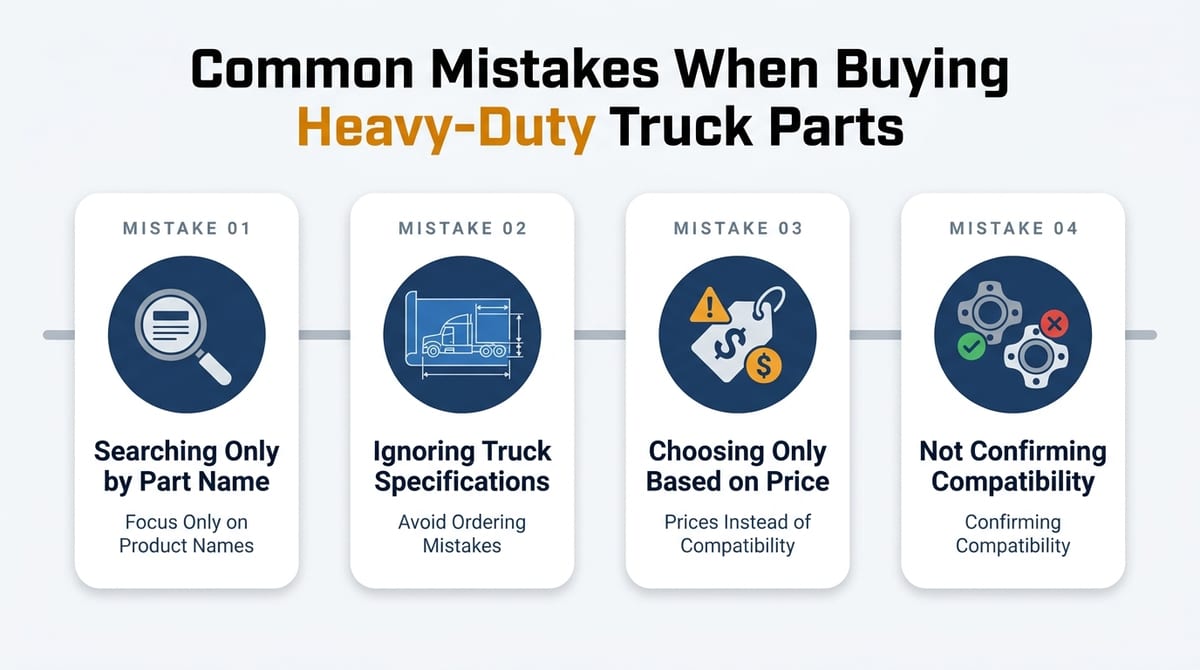
Common Mistakes When Buying Heavy-Duty Truck Parts
Many ordering mistakes happen because buyers focus only on product names or prices instead of confirming compatibility.
Avoid these common problems:
Searching Only by Part Name
A general search such as “truck radiator” or “truck cooler” may return many products that are not designed for your specific vehicle.
Always include your truck’s make, model, year, and other available identification details when searching.
Ignoring Truck Specifications
Heavy-duty trucks often have multiple configurations within the same model year. Always confirm that the replacement part matches your truck’s exact application.
Checking specifications before ordering helps prevent installation problems and unnecessary delays.
Choosing Only Based on Price
The lowest-priced option may not always provide the best value.
Before making a decision, consider:
- Product quality.
- Material standards.
- Warranty coverage.
- Supplier reliability.
- Expected service life.
A reliable replacement part can reduce long-term maintenance costs.
Not Confirming Compatibility
Before completing your order, verify important information such as:
- Part numbers.
- Vehicle application.
- Dimensions.
- Connection specifications.
A few extra minutes of verification can prevent costly mistakes.

Finding Parts for Different Truck Brands
Different truck manufacturers use different designs, systems, and component specifications.
Searching by truck brand can make it easier to find compatible replacement parts for your specific application.
Quick Fit Parts supports a wide range of heavy-duty truck applications, including:
- Freightliner.
- Peterbilt.
- Kenworth.
- Volvo.
- International.
- Other commercial truck models.
Customers searching for specific manufacturer components can explore our Peterbilt truck parts and Kenworth truck parts categories to find compatible replacement options.
How Quick Fit Parts Helps You Find the Right Component
Finding the correct heavy-duty truck part does not have to be complicated.
Quick Fit Parts makes the identification process easier by allowing customers to search by:
- Part category.
- Truck make and model.
- OEM number.
- QFP part number.
- Vehicle information.
Whether you are replacing a cooling component, engine-related part, or another heavy-duty truck system component, having the right information helps you find the correct solution faster.
If you are unsure which part matches your truck, the Quick Fit Parts support team can help verify compatibility before you place your order.
Our live chat support allows you to get answers quickly without spending hours searching through catalogs.
Frequently Asked Questions
What information do I need to find a heavy-duty truck part?
You should have your truck’s make, model, year, part category, and any available OEM or QFP part number. VIN information and product specifications can also help confirm compatibility.
Can I find a truck part using a VIN?
Yes. A VIN helps identify your truck’s specific configuration. A complete 17-digit VIN provides the most accurate information when verifying compatibility.
What is an OEM part number?
An OEM part number is a unique identification code assigned to a component by the original equipment manufacturer.
It helps buyers locate matching replacement options and compare compatible parts.
Are aftermarket truck parts reliable?
Aftermarket parts can provide reliable performance when they are manufactured according to proper specifications and quality standards.
The right choice depends on the manufacturer, materials, warranty, and application requirements.
What should I do if I cannot identify the correct part?
Start a live chat with Quick Fit Parts and provide your truck details, VIN information, OEM number, or any available part information.
Our specialists can help identify the correct replacement component and guide you toward the right solution.
Final Thoughts
Finding the right heavy-duty truck part requires accurate information, proper verification, and attention to detail.
By checking your truck application, part numbers, dimensions, and specifications before ordering, you can avoid costly mistakes and reduce unnecessary downtime.
The right replacement part helps keep your truck operating efficiently and prevents avoidable repair delays.
Write A Comment