
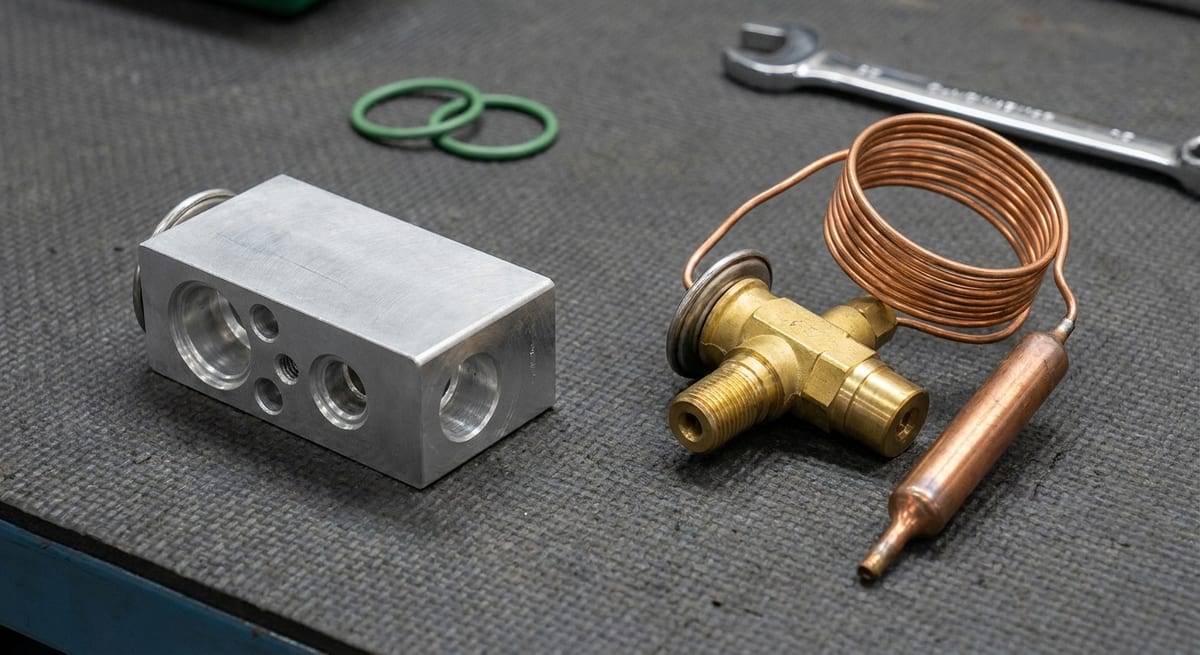
A replacement A/C valve can look almost identical to the original and still be wrong for the truck. Another valve may look completely different yet perform the same basic job. That is where catalogue descriptions such as “block valve” and “expansion valve” can confuse.
A block valve is a type of thermostatic expansion valve, or TXV. The comparison is therefore between two valve designs: a block-type TXV and a conventional TXV with a remote sensing bulb.
Both regulate refrigerant entering the evaporator. What differs is how they sense operating conditions, connect to the refrigerant lines, and fit into the HVAC assembly. Those differences matter when identifying a replacement.
Block Valve vs. Conventional Expansion Valve at a Glance
The table below compares common arrangements. Individual applications can differ, so the original component reference and service information remain the basis for selection.
| Feature | Block-type expansion valve | Conventional bulb-type expansion valve |
|---|---|---|
| Common names | H-block valve, block TXV, box-type valve | Bulb-type TXV, conventional TXV |
| Body layout | Compact block with separate refrigerant passages | Valve body connected to a remote sensing bulb |
| Temperature sensing | Typically within the block at the evaporator return passage | Through a bulb attached to the evaporator outlet line |
| Connections to check | Port spacing, mating faces, seals, and mounting pattern | Inlet and outlet fittings, sensing bulb, and equaliser connection where fitted |
| Replacement requirement | Match the application and operating specification | Match the application and operating specification |
Neither design is a universal upgrade over the other. The correct choice depends on the system the truck was built with.
What Does an Expansion Valve Control?
The expansion valve meters refrigerant into the evaporator as cooling demand changes. Its operation helps maintain the intended refrigerant condition at the evaporator outlet.
A term often used here is superheat: the amount by which the refrigerant vapour temperature exceeds its saturation temperature at the measured pressure. A TXV responds to operating conditions to regulate flow, rather than simply maintaining one fixed opening.
That is why valve selection involves more than matching the fittings. Two valves may connect physically but have different application specifications.
How a Block-Type Expansion Valve Works
A block-type valve commonly brings the evaporator supply and return connections together in one body. Liquid refrigerant passes through the metering section towards the evaporator, while returning vapour passes through a separate passage.
In this arrangement, the valve senses conditions in the return passage within the block. It does not require the separately mounted sensing bulb found on many conventional TXVs.
The compact layout changes what you need to inspect. The mating surfaces, passage positions, and mounting holes must agree with the adjoining components. A valve that looks right from the front may have different port spacing or sealing details on the opposite face.
How a Conventional Bulb-Type Expansion Valve Works
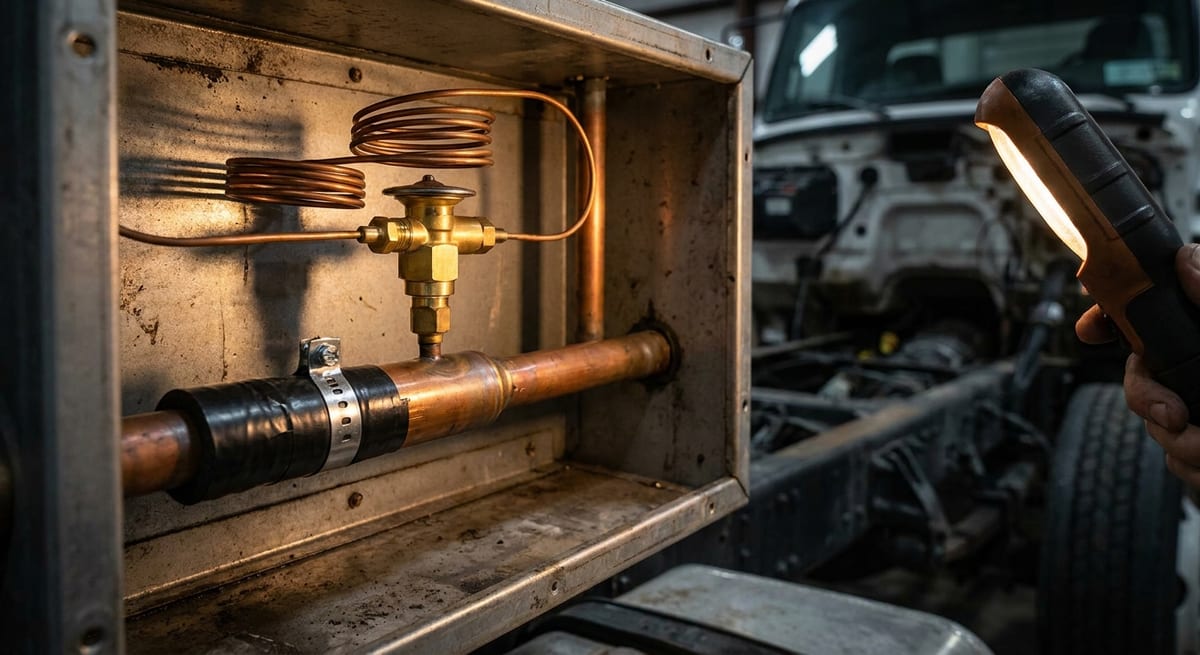
A conventional TXV commonly uses a remote sensing bulb connected to the valve by a small capillary tube. The bulb attaches at a specified location on the evaporator outlet line and responds to its temperature.
Some designs also have an external equaliser line that provides an outlet-pressure reference. The capillary tube and equaliser line serve different purposes and should not be confused.
This arrangement makes bulb positioning and the specified pressure connection part of the installation. Replacing the valve body without following those requirements can leave the system operating incorrectly.
How to Tell Which Design Is Installed
Start with the valve reference and the truck’s service information. Use the visible layout to support that identification.
For a block-type valve, look for a compact body joining multiple refrigerant passages near the evaporator connections. For a conventional bulb-type valve, look for the remote bulb and its capillary tube. Access may be restricted, and insulation or surrounding hardware can hide these features.
Before ordering, photograph:
- The valve markings or identification label.
- Both sides of the connection arrangement.
- Mounting points and adjoining pipes.
- Any visible sensing bulb or external equaliser connection.
Keep the photos together with the truck’s VIN and HVAC assembly details. This gives the supplier more to work with than a description such as “the square valve behind the dash.”
Which Connections Need to Match?
Port layout and sealing surfaces
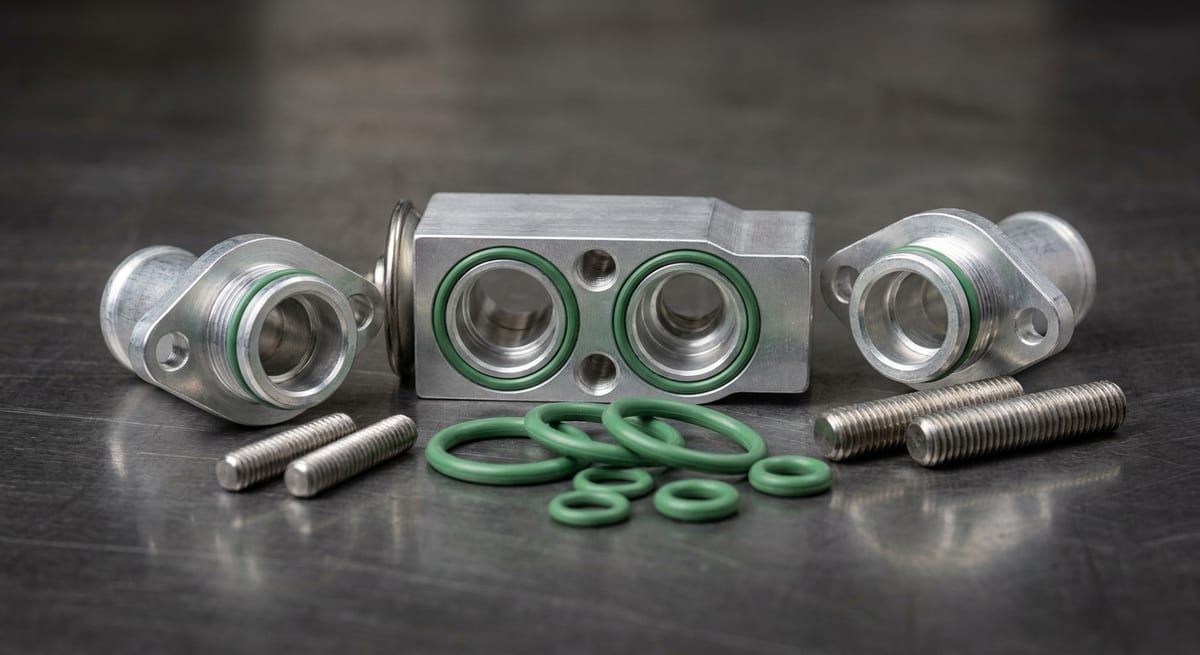
Compare the replacement with the original connection arrangement. Check which passage connects to which line, the fitting sizes, and the specified seals.
Do not assume two block valves are interchangeable because their mounting holes line up. Likewise, matching threads on a conventional valve do not establish that its operating specification suits the system.
Sensing and equaliser arrangements
For a bulb-type valve, confirm the required bulb arrangement and whether an external equaliser connection is specified.
A missing connection should prompt another application check. It should not be treated as an unused feature that can simply be ignored.
Mounting and surrounding clearance
Check the space around the installed valve, including line routing and access for the specified mounting hardware. A replacement should fit without forcing the refrigerant pipes into position.
If the proposed part requires an unexplained change to the original arrangement, resolve that discrepancy before installation.
Can You Replace One Design with the Other?
A block-type valve and a conventional bulb-type valve should not be treated as direct substitutes.
Changing the design may involve different lines, connection pieces, sensing arrangements, or mounting provisions. An adapter that joins two fittings does not establish that the resulting assembly will operate as intended.
For a normal repair, match the specified valve design and application. Consider a conversion only when the vehicle or component supplier documents the compatible parts and installation procedure.
What If the Evaporator Is Being Replaced Too?
Keep the valve comparison separate from the broader evaporator fitment check.
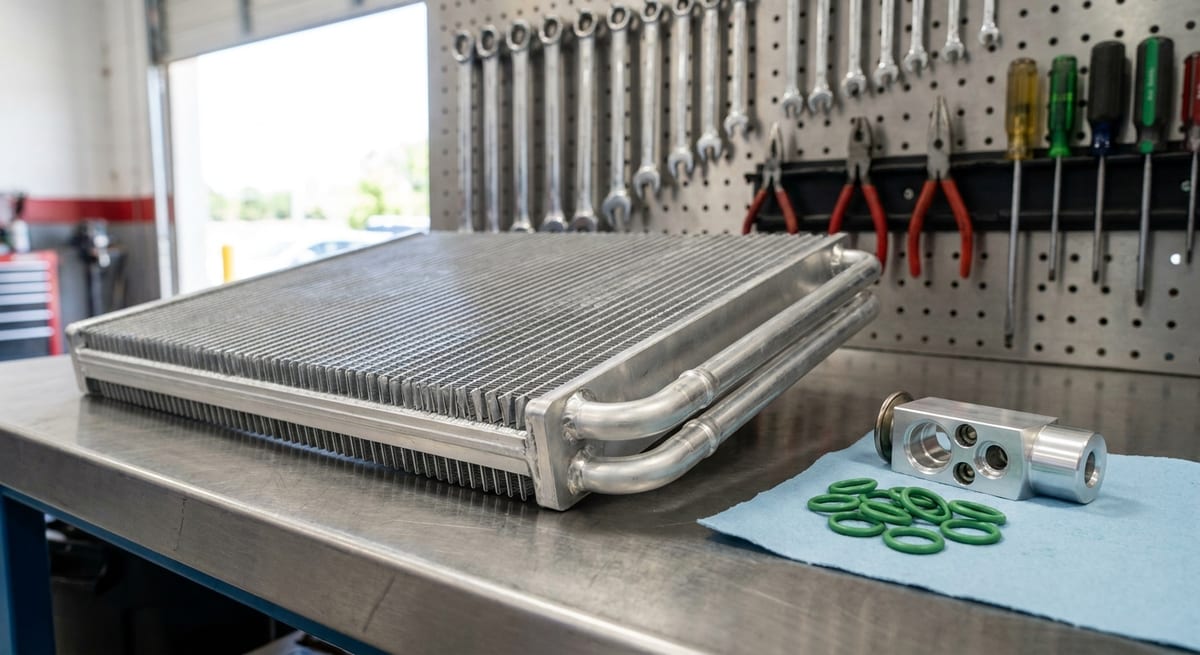
Confirm that the selected core accepts the specified valve arrangement, then check whether the valve and required seals are included or supplied separately. A listing that says “for block valve” may describe compatibility rather than package contents.
For OEM cross-references, core measurements, VIN checks, and inlet/outlet specifications, use our truck AC evaporator fitment guide.
When comparing truck A/C expansion valves, check the individual part reference and specifications against the installed assembly.
Frequently Asked Questions
Is a block valve the same as an expansion valve?
A block valve is one design of a thermostatic expansion valve. The term describes its construction and connection layout, rather than a separate cooling function.
Does a block-type valve provide colder air?
The design alone does not establish cooling performance. The valve must suit the system, and the rest of the A/C circuit must operate correctly. Changing valve style is not a substitute for diagnosing poor cooling.
Are internally and externally equalised TXVs interchangeable?
Do not assume they are. The pressure-sensing arrangement is part of the application specification. Match the original requirement or a documented replacement recommendation.
Can I identify a faulty valve from frost alone?
No. Frost is an observation to investigate, not a diagnosis by itself. Refrigerant conditions, airflow, and other system faults need to be considered before condemning the valve.
Should I adjust a replacement valve to make the cab colder?
Do not assume the valve is adjustable or that adjustment is appropriate. Follow the component and vehicle instructions rather than changing settings to compensate for another fault.
What should I ask when a catalogue only says “expansion valve”?
Ask for the valve design, replacement reference, connection specifications, and intended application. Clarify whether the listing refers to a block-type or remote-bulb arrangement before ordering.
The useful question is which valve matches the truck’s existing system. Start with the component reference, compare the sensing and connection arrangements, and resolve any mismatch before the repair begins. If identification is unclear, contact Quick Fit Parts with the valve markings, HVAC details, and connection photos.

Write A Comment