
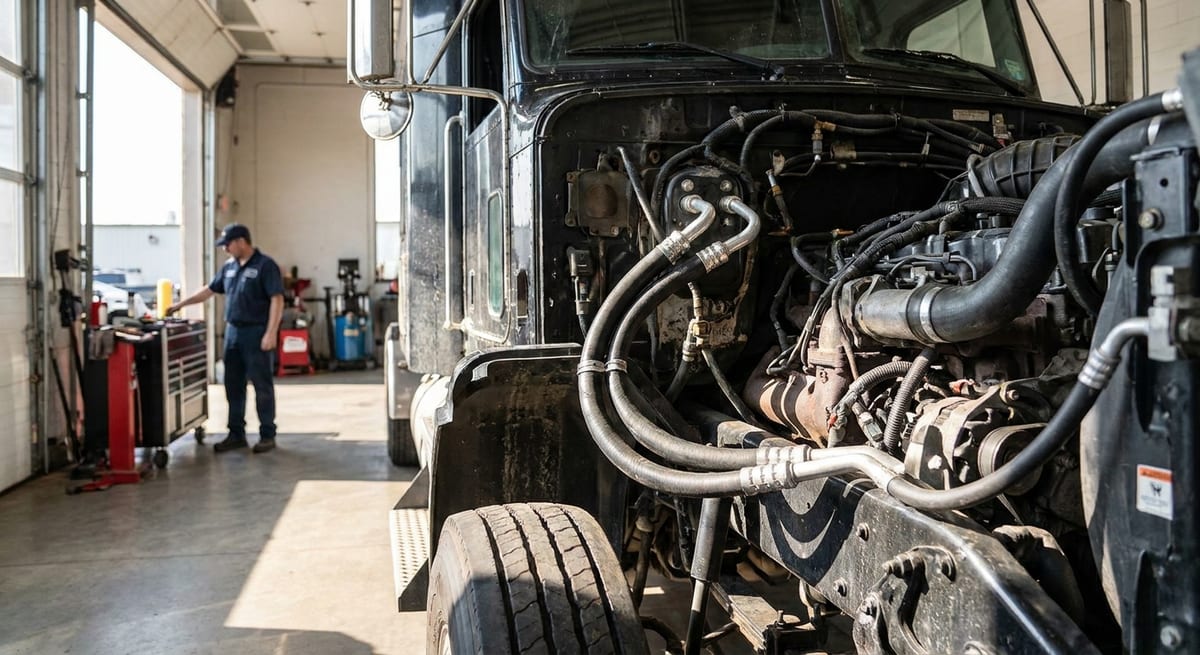
Every AC system loses a little refrigerant over years of service, but a system that needs a charge every season has a leak, and on a heavy truck, the truck AC line run is where most of them are. Lines move with the engine, pass near heat, and carry fittings and crimps, each of which can be a possible escape point.
Why AC Lines Leak on a Semi Truck
The line run on a tractor is long, and long runs are exposed to more of everything that causes leaks.
Vibration works at the crimps where hose meets fitting and at the brackets that hold the line in place. Heat ages the hose from the outside and hardens the seals inside the joints. Road debris nicks the aluminum line. Movement between the engine and the chassis flexes the hose routed across that gap at every start. None of these is a defect; they are what a line run accumulates over a service life.
The sleeper line run adds length again, which is why trucks with a bunk system have more joints to check.
Where to Look First
Leaks are not random. The places that move, get hot, or contain a seal are where to start.
Crimped hose ends, because that joint is mechanical and it works loose over time. Threaded fittings, because every one contains an O-ring. The compressor connections, because that is where the most vibration is. Anywhere the line touches or passes close to a bracket, since a rubbing point eventually becomes a hole. The service ports, because the valve cores themselves seal.
The Oily Residue Clue
Refrigerant carries oil, so a leak that has been there a while leaves an oily film that collects road dust. A dark greasy ring around a fitting or a stripe running down from a crimp is the cheapest leak indicator there is, and it is visible before any equipment comes out.
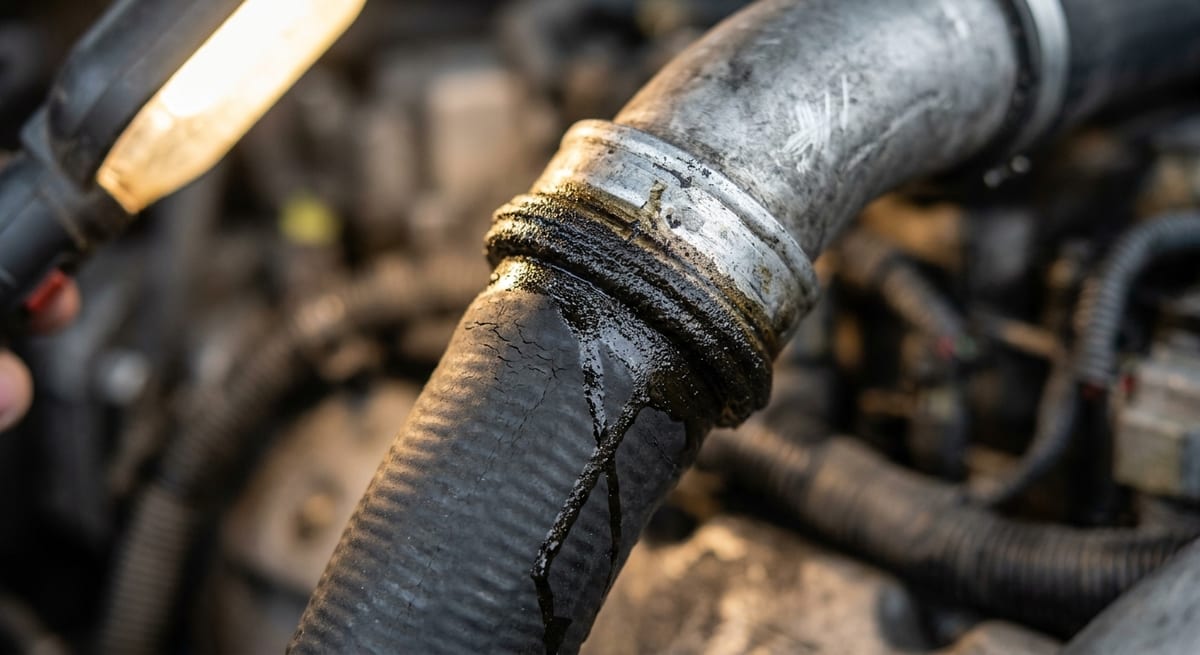
Clean the suspect area and look again after a few days of running. A film that comes back is a confirmed leak.
Three Ways to Find the Leak
Each method has a situation it suits, and the choice depends on how fast the leak is and how accessible the line is.
Soap Solution on a Pressurized System
With pressure in the system, a soap solution brushed over a joint will bubble at a leak. It works well on accessible fittings and costs nothing. It does not work on a line buried behind other components, and a very slow leak may not bubble enough to see.
UV Dye
Dye goes into the system, runs for a period, and then shows under a UV lamp at the point of escape. It finds slow leaks that soap misses, and it keeps working: the dye stays in the system, so a leak that appears later still shows.
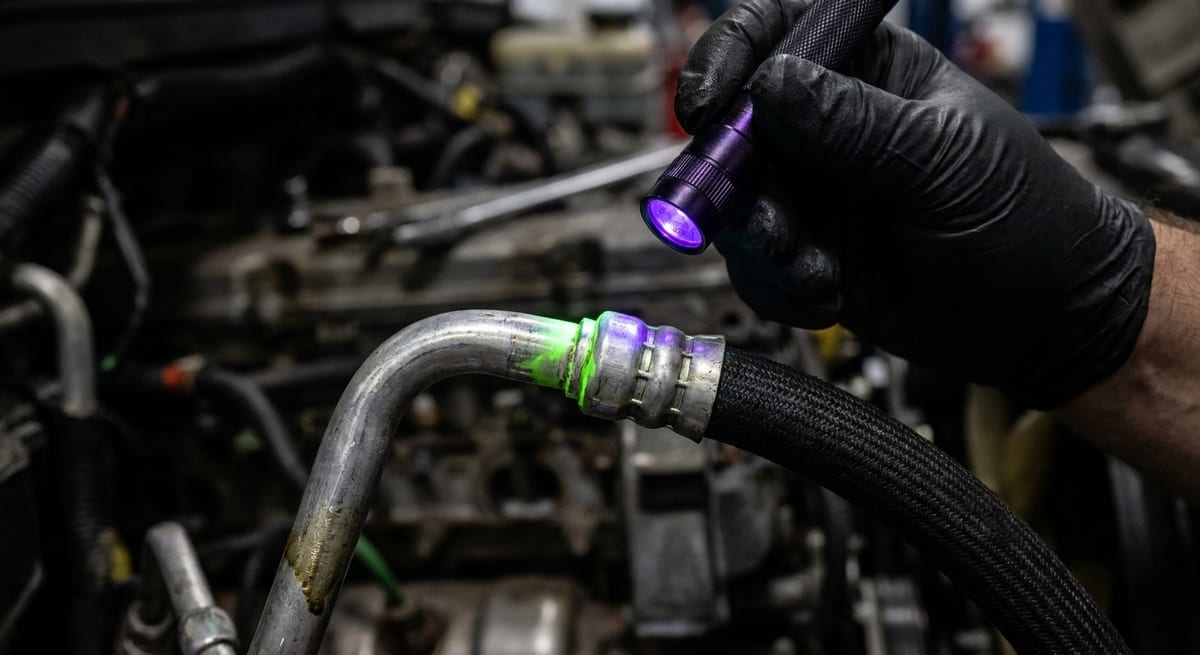
The limitation is time. Dye needs the system to run before there is anything to see, so it is not a same-hour diagnosis.
Electronic Leak Detector
A detector sniffs for refrigerant and signals when it finds it. It is the fastest method on a hidden line and the most sensitive, and that sensitivity is also its weakness: in a windy yard or near other fumes, it gives readings that are not the leak. Confirm a detector hit with soap or dye before cutting anything apart.
What to Repair and What to Replace
Some leaks are a seal, and some are the line.
A leak at a threaded fitting is usually the O-ring, and the fix is a new seal of the correct material, which is covered in AC O-rings for trucks. A leaking valve core at a service port is a core replacement. Both are small repairs.
A leak at a crimp, a hole in the hose, or a cracked aluminum line is not repairable in a way that holds. The line comes out. Patching a hose that has hardened enough to split puts the system back on the road with the next failure already in it.
What Else Comes Out With the Line
If the system lost its charge and sat open to the atmosphere, moisture is in the desiccant, and the AC drier is replaced with the line. Refrigerant that left also took oil with it, so the charge has to be rebuilt by weight rather than by feel, which is set out in how much refrigerant and oil a semi-truck AC system takes.
If the compressor ran low on oil for a period before the leak was found, it is worth inspecting rather than assuming it survived.
After the Repair
Evacuate before charging. A vacuum pulls out the air and boils off moisture, and holding the vacuum is also the leak test: if the gauge creeps back up with the pump off, the system is still leaking, and charging it is throwing refrigerant away.
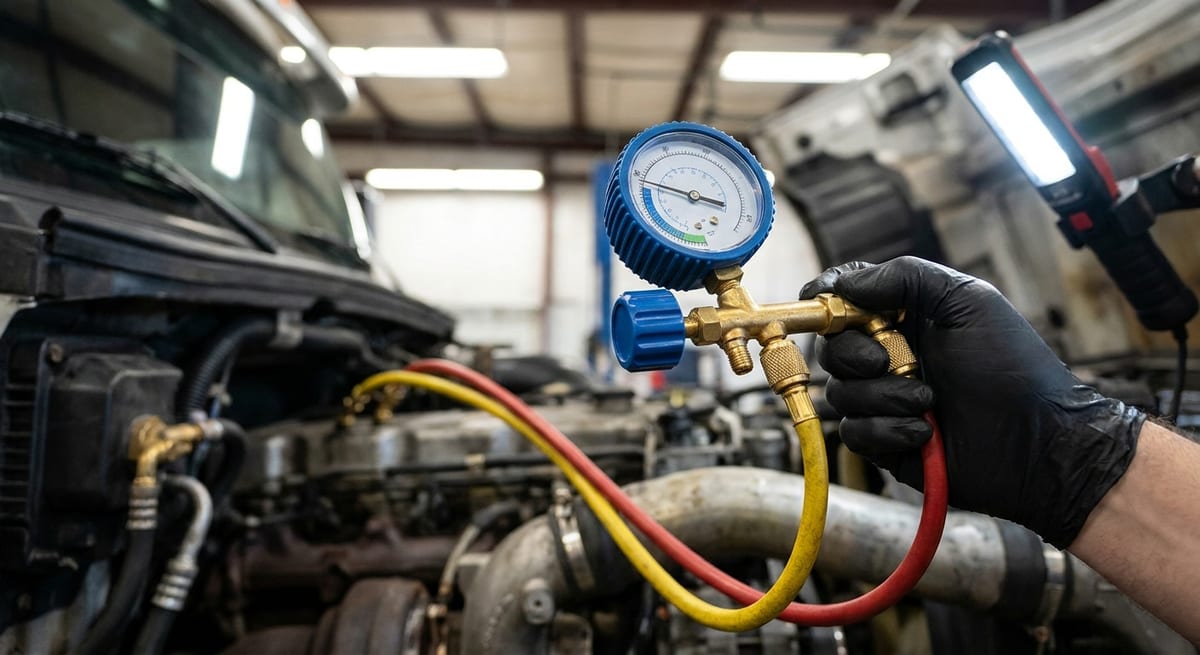
Charge by weight to the specification for that HVAC configuration, then check the pressures running. If the system was low because of a truck AC evaporator leak rather than a line leak, the symptoms are similar, but the repair is not, so confirm where the refrigerant was going before the system goes back together.
Ordering Lines and Fittings
Lines are configuration-specific: length, routing, fitting type, and end orientation all have to match, and a line that is close but not right will be fought into place and will leak at the joint it was forced into.
Have the truck details to hand, and the seals and drier on the bench before the system is opened. Filtering by truck make narrows the list before you start matching ends.
Frequently Asked Questions
How can I tell if my AC line is leaking or the compressor is?
Look for the oily residue first; it collects at the escape point. If the film is at a crimp or a fitting, the line is the suspect. At the compressor body, the compressor is.
Can I repair a leaking AC hose instead of replacing it?
A seal at a threaded fitting is replaceable. A leak at a crimp or a hole in the hose is not: the line comes out.
How long does UV dye take to show a leak?
Long enough for the system to run and the dye to reach the leak. It is not a same-hour method, which is its trade-off against speed.
Why does my AC need recharging every summer?
Annual recharging is a leak, not normal consumption. Finding it costs less than the refrigerant over two or three seasons.
Do I need to replace the drier after fixing a line leak?
If the system lost its charge and was open to atmosphere, yes. The desiccant has a limited capacity for moisture, and it does not recover.
Will the system hold a vacuum if there is still a leak?
No, and that is the point of the test. A vacuum that will not hold with the pump off means the leak is still there.
Found the leak and need the parts? Send us the truck and where the line runs, and we will confirm the line, fittings, and seals before you order.

Write A Comment