
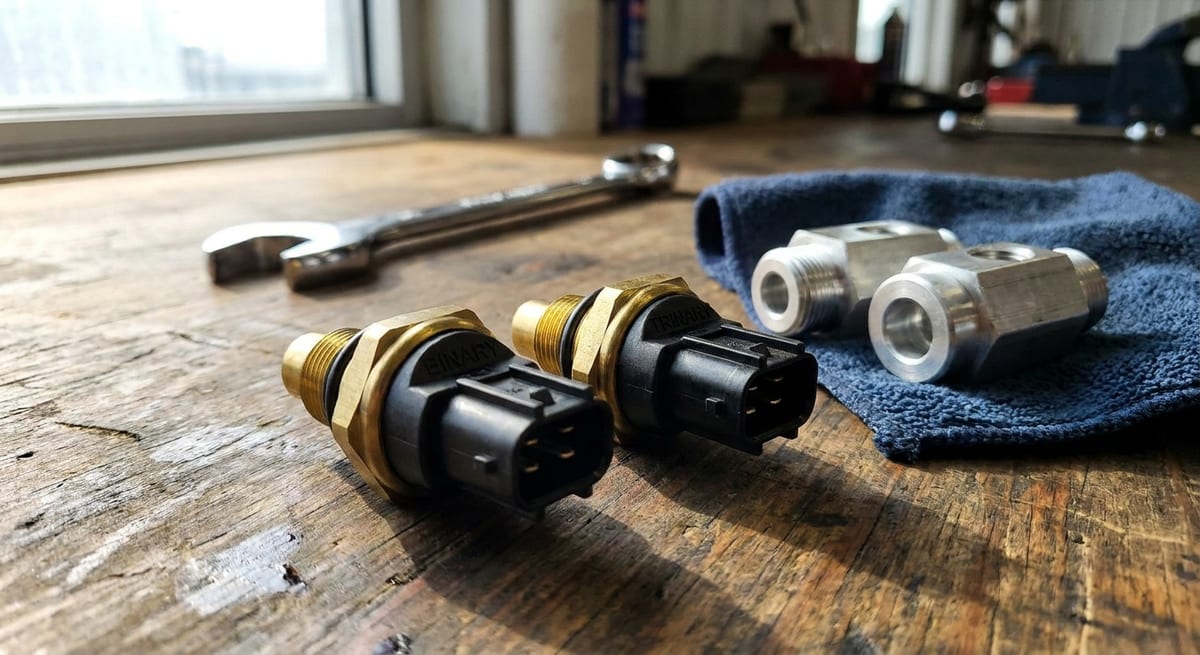
A switch the size of a thumb is what stands between a working system and a seized compressor, and when the clutch stops cycling, the truck AC switch is usually the first part worth testing. Binary and ternary switches look alike on the bench and thread into the same port, but they do not do the same job, and fitting the wrong one leaves part of the system unprotected.
What a Pressure Switch Does in a Truck AC System
The switch sits on the high side and reads refrigerant pressure. Its only function is to open or close a circuit when pressure crosses a set point, which is how the system protects itself without anything electronic making the decision.
Two conditions matter. Pressure too low means there is not enough refrigerant to carry oil to the compressor, so the clutch has to be cut out before the compressor runs dry. Pressure too high means the high side is not shedding heat, so the clutch has to be cut out before the pressure finds the weakest joint. A switch that handles both is doing the minimum a system needs.
How the Binary Switch Works
Binary means two functions in one body: a low-pressure cutout and a high-pressure cutout, both acting on the compressor clutch circuit.
In normal operation, the switch is closed, and the clutch has power. When pressure falls below the low set point, the contacts open and the clutch disengages. When pressure climbs past the high set point, the contacts open again for the same reason. In both cases, the system stops rather than damaging itself, and the switch resets on its own once pressure returns to the working range.
What a Binary Switch Does Not Do
It does not control the condenser fan. On a truck where the fan is commanded by pressure rather than by engine temperature alone, a binary switch leaves that function with nothing driving it.
How the Trinary Switch Adds a Third Circuit
A trinary switch does everything a binary switch does and adds a separate circuit that closes at a mid-range pressure to bring on the condenser fan.
The logic is straightforward. As head pressure rises with heat load, the fan circuit closes before the high-pressure cutout is reached, so the truck AC condenser gets airflow and pressure comes back down without the compressor having to shut off. The cutout is still there as a backstop, but on a correctly wired system it is rarely the thing that acts first.
That third circuit is electrically independent of the clutch circuit, which is why a ternary switch has more terminals than a binary one.
Telling the Two Apart on the Truck
Count the wires at the connector. Two wires mean the switch is handling the clutch circuit only. Three or four means there is a separate fan circuit, which is the ternary arrangement.
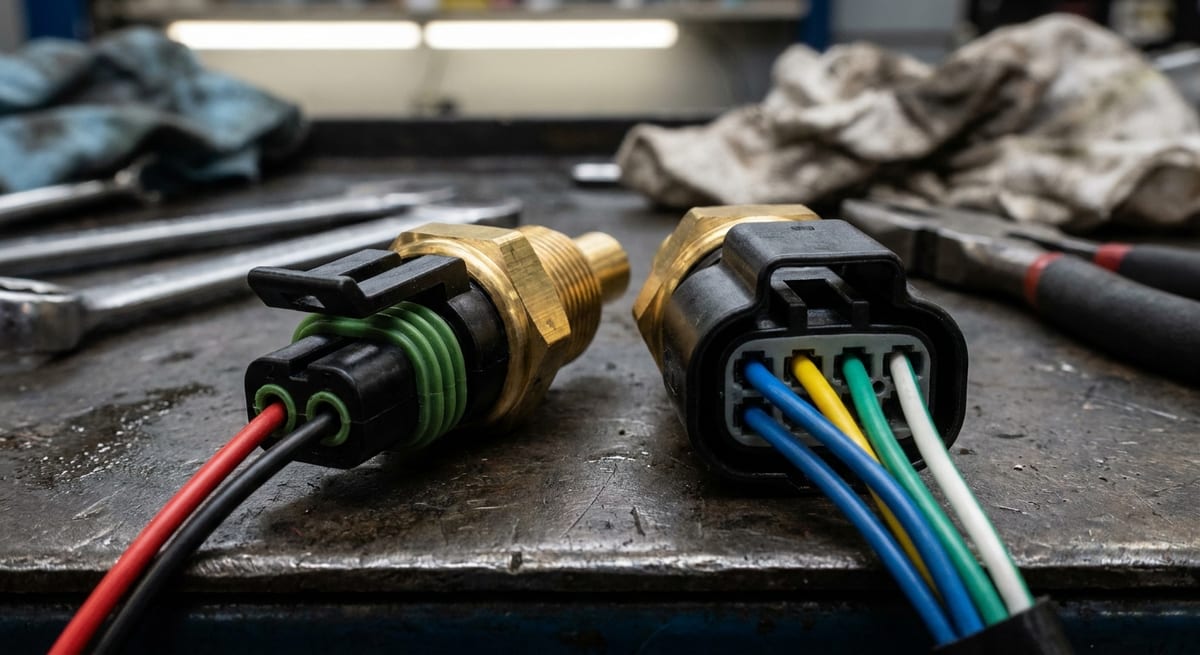
Part numbers and thread sizes do not settle it, because both types are made in the same fittings. The wiring is what tells you what the switch was doing on that truck.
Fitting the Wrong Switch
Two mistakes come up, and they fail in opposite directions.
A binary switch in place of a ternary one leaves the fan circuit dead. The system still cools until heat load rises, then head pressure climbs with no fan to bring it down; the high-pressure cutout starts tripping, and the AC cycles off in traffic and comes back on when the truck is moving. That pattern is often read as low refrigerant, which leads to a charge the system did not need.
A ternary switch in place of a binary one usually works, because the extra circuit simply has nothing connected to it. It is not a fault, but it is worth knowing which type the truck was built with before deciding that a wiring change is needed.
Testing a Switch Before Replacing It
The switch is cheap enough that it gets replaced on suspicion, which is how a real fault goes unfound.
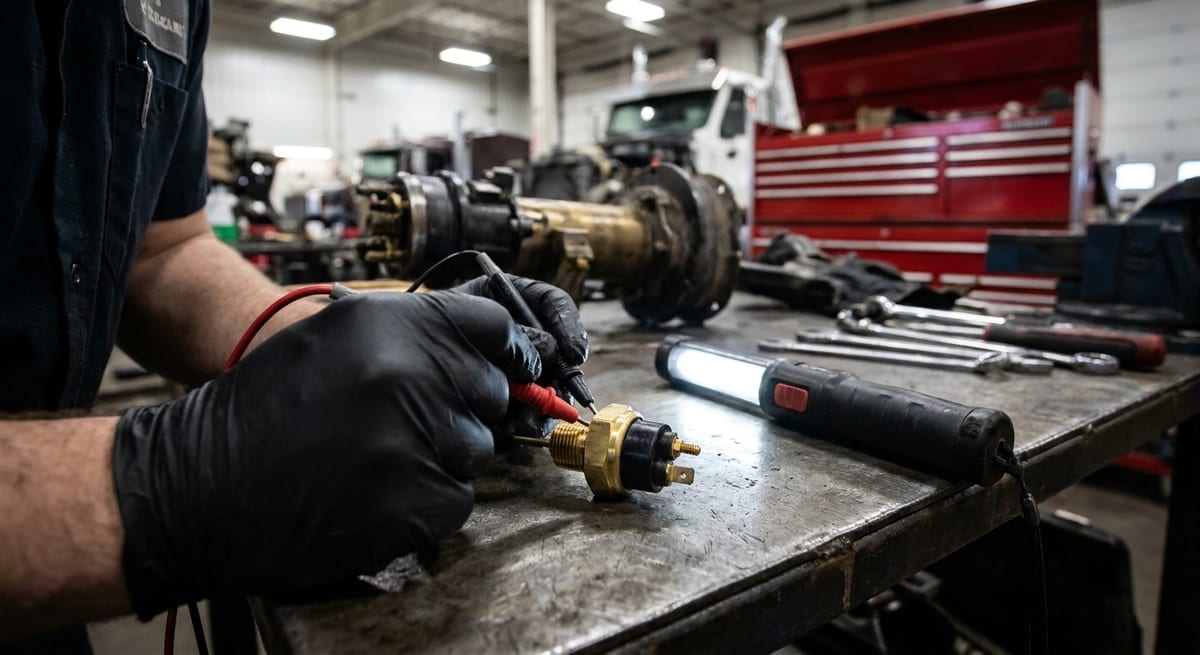
Check continuity across the clutch terminals with the system at rest and at a known pressure. A switch that reads open at normal static pressure is not closing when it should. A switch that reads closed at a pressure well past its high set point is not opening when it should, and that is the dangerous failure, because nothing is protecting the compressor.
For the fan circuit, the test is whether it closes as head pressure rises and opens again as it falls. If it never closes, the fan never comes on by pressure.
What Else Causes the Same Symptom
A clutch that will not engage can be the switch, but it can also be the relay, the connector, the clutch coil, or a low charge. Measure the pressure first. If the pressure is in range and the clutch still will not engage, the fault is electrical, and the switch is one of several things in that circuit.
A system that was low because of a leak brings its own problem: refrigerant that escaped took oil with it, which is covered in how much refrigerant and oil a semi-truck AC system takes. If the system was open to air, the AC drier has moisture in the desiccant and comes out at the same time.
Ordering the Right Switch
Three things identify it: the number of terminals, the thread and fitting, and the pressure set points. Terminal count is read at the connector, and the set points come from the service information for that HVAC configuration, not from the switch that is already fitted, which may itself be the wrong part.

Filtering by truck make narrows the options before you start matching fittings, and the rest of the high-side components sit on the truck AC line page.
Frequently Asked Questions
Can I use a ternary switch where a binary one was fitted?
Usually yes. The clutch functions are the same, and the extra fan circuit is simply left unconnected. Confirm the thread and the set points match.
Can I use a binary switch where a ternary one was fitted?
Not without losing the fan circuit. The AC will cool until the heat load rises, then start cycling on the high-pressure cutout.
How many wires does a ternary switch have?
Three or four, because the fan circuit is electrically separate from the clutch circuit. A binary switch has two.
Why does my AC cool on the highway but cut out in traffic?
That pattern points to head pressure rising with no airflow across the condenser. A dead fan circuit is one cause, and so is a blocked or damaged condenser.
How do I know if the switch is bad or the clutch is bad?
Check continuity across the switch at a known pressure. If the switch closes as it should and the clutch still will not engage, the fault is further along the circuit.
Does the switch need to be replaced when the compressor is replaced?
Not automatically. It is worth testing, because a high-pressure cutout that no longer opens is one of the things that can shorten a new compressor’s life.
Not sure which switch your truck takes? Send us the truck and the terminal count and we will confirm the type and set points before you order.

Write A Comment